
Quick Legal Explainer: The Federal Unraveling of Trans Rights
And what it means for the health of democracy.


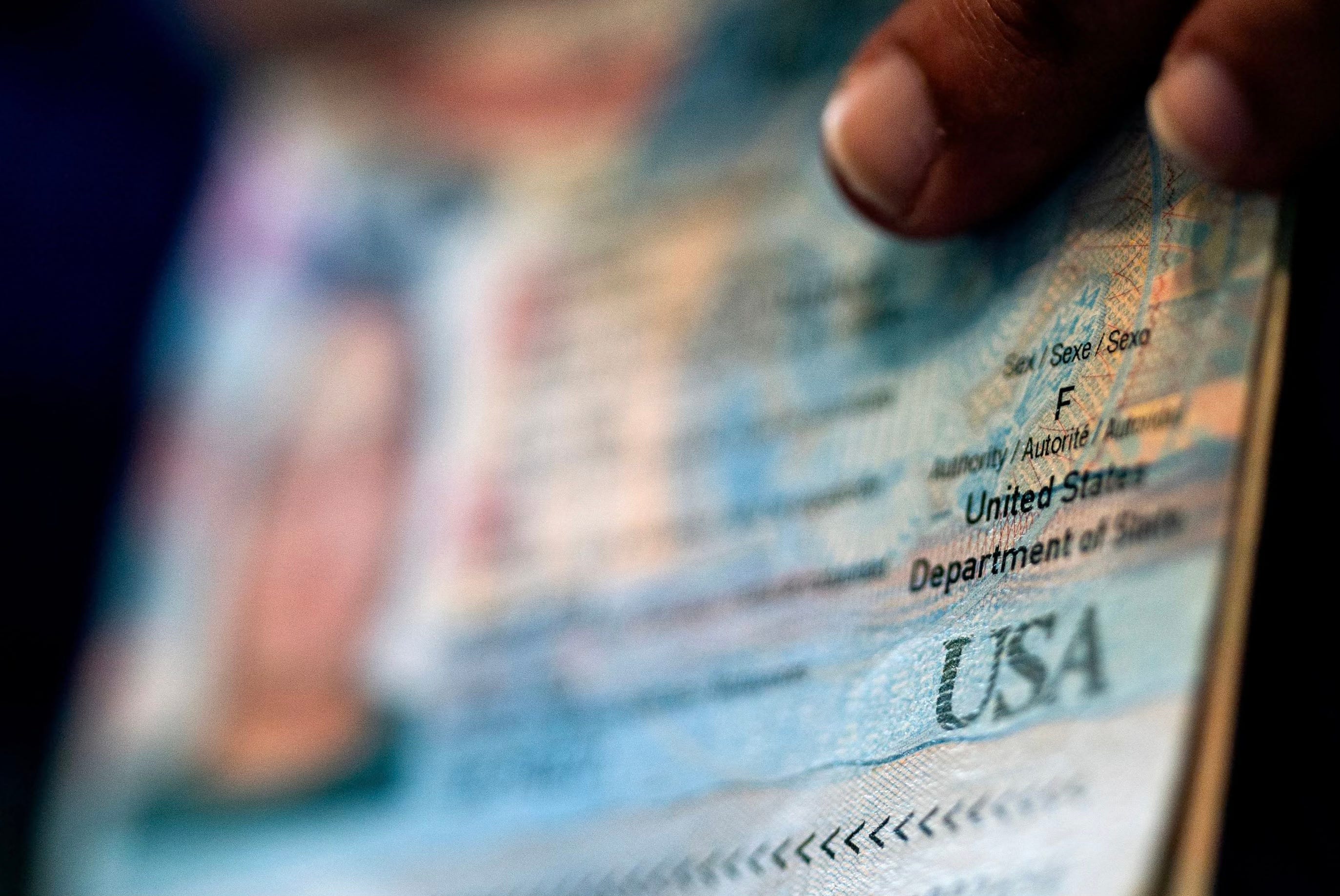
Earlier this month, the Supreme Court ruled that the Trump administration is allowed to enforce a passport policy that blocks transgender and nonbinary Americans from selecting a sex marker that aligns with their gender identity. The order effectively reinstates a requirement that U.S. passports reflect sex assigned at birth, undoing a 2022 policy that permitted applicants to choose “M,” “F,” or “X” markers.
The move comes amid a year of federal policies targeting the trans community. In January, Executive Order 14168 declared that the federal government recognizes only two sexes and directed agencies to strip gender identity language and protections from their programs. A few weeks later, a separate executive order halted federal funding for gender-affirming care for anyone under 19 and directed agencies to eliminate coverage for that care from federal health plans. A third order moved to ban trans women from women’s sports and threatened to pull federal funds from schools that allow their participation.
Still, policies like these capture only half the picture. In recent history, federal courts have been increasingly producing decisions that mirror the White House’s priorities, leaving trans protections in an ever more precarious and unstable position.
How Administrative Rollbacks Bleed Into Judicial Doctrine
Just a few weeks ago, a federal court issued a major trans rights ruling in Parents Defending Education v. Olentangy Local School District. The case - brought by national conservative advocacy group Parents Defending Education (PDE) - challenged a school district policy that required students to use the preferred pronouns of trans and nonbinary students.
The Sixth Circuit concluded that the school district failed to show that allowing students to misgender their trans or nonbinary peers would “materially and substantially disrupt” the school environment. Because of that, the Court said the district likely violated the First Amendment by punishing students who refused to use a student’s preferred pronouns. As a result, the district is blocked from further enforcing the policy.
While framed as a free speech decision, this mandate effectively allows the ideological objections of some students - or their families - to override the interests of trans students. In doing so, this decision may mark the start of a new chapter of anti-trans litigation, one that is developing in tandem with the federal government’s expanding slate of anti-trans executive orders.
Over the past year, advocacy groups aligned with the White House have increasingly brought anti-trans litigation to harden temporary administrative mandates into legal doctrine. If successful, these lawsuits will help lock in jurisprudence that is likely to continue well after the current administration ends. And the cases chosen to translate these administrative shifts into judicial doctrine largely involve schools, where children are being used as test subjects in the larger battle over trans rights.

Olentangy has now opened the door for students to intentionally - and perhaps maliciously - misgender their trans peers, as the Court did not consider willful misgendering harassment, despite evidence that misgendering is harmful to trans youth. As a result, this case has the potential to limit how educators can support trans students and created precedent that hostile or demeaning conduct can be reclassified as protected speech. And the implications don’t stop there.
Turning Lives Into Litigation
While Olentangy is only one case, it opens the door to a wave of copycat lawsuits aimed at testing how far courts will go in redefining the rights of trans students. And once those cases start coming, they will pull scores of gender nonconforming young people into drawn-out legal proceedings that expose their identities to invasive public scrutiny.
For starters, the prospect of discovery alone allows plaintiffs to demand school counseling notes and private emails between students and trusted adults. Even when some material is ultimately shielded by privilege, the process still forces the most intimate aspects of a child’s identity into the machinery of litigation and turns a minor’s possible support system into documents for adversarial review.
When a lawsuit places a child’s gender identity at issue, compelled testimony can require teachers, counselors, and administrators to answer questions about that young person’s gender under oath. Courts rarely consider how humiliating it can be for a minor to have their identity dissected in a deposition room or transcribed into a trial record. And simply calling adults to testify sends a message that a trans child’s personhood is something to be doubted or questioned in a formal proceeding.

And because courts evaluate experts through extensive admissibility processes - such as Daubert - litigants can still submit adults with hyper-partisan, ideological agendas as “experts” on a child’s gender or well-being. Even if those opinions are ultimately excluded from the record, the very act of litigating them forces trans students to watch adults debate their legitimacy as though it were an empirical controversy, reducing who they are to a hypothesis that can be proved or disproved independent of their own self-identification.
The Bigger Picture
Trans youth may be the focus of the federal government’s actions right now, but these lawsuits are part of a broader campaign against the trans community as a whole. And that targeting is not incidental; it mirrors a well-documented pattern in how governments expand their authority.
When an administration wants to probe the reach of its executive and legal power, it often begins with the population that has the weakest protections and the least capacity to challenge that authority. This is the core dynamic of democratic backsliding: governments first apply new laws that target the most vulnerable people, then extend those same mechanisms to everyone else.
By virtually every measurable standard, trans Americans are among the most legally unprotected in the country. In 2025, more than 1,000 anti-trans bills have been introduced across the country, and 27 states now have laws on the books restricting or banning gender-affirming care for youth.
Trans rights depend on a patchwork of statutes and agency policies, rather than any single, durable source of protection that consistently shields gender identity under the Equal Protection Clause. Without that anchor, the legal protections available to trans Americans remain unstable and can shift dramatically from one administration to the next. It is this vulnerability that makes trans Americans an ideal population for testing the boundaries of state power.
When a group isn’t recognized as a protected class, a single administrative change can trigger a chain of legally permissible consequences. The passport ruling illustrates how this works. Redefining a group at the agency level allows the government to revise the regulations that rely on that definition, which then reshapes the policies that flow from those regulations. In other words, a shift in one place becomes the legal basis for restrictions elsewhere. If the government can redefine “sex” for identity documents, it can use that same definition to rewrite eligibility rules for healthcare plans, public housing, and education funding.
Thus, what looks like a narrow administrative tweak can become the basis for a far more expansive process: redefine the category, then adjust the programs that rely on that definition, then enforce those adjustments across every federal system. The first iteration happens on the group least able to challenge it, but the mechanism itself can be extended to anyone.
The Collective Consequences
It must be said that the legal harm to trans people is substantial on its own, and recognizing the democratic stakes involved does not diminish the serious and direct legal impact on trans people themselves. The immediate and systemic effects are not competing narratives, but parallel ones.
The first narrative is concrete: trans people - particularly trans youth - experience real, material legal harm, and that fact is important on its own. The second is structural: the legal tools built through these policies do not remain confined to their initial target. A government willing to narrow one group’s recognition through administrative fiat acquires a method that can be repurposed and redirected elsewhere.
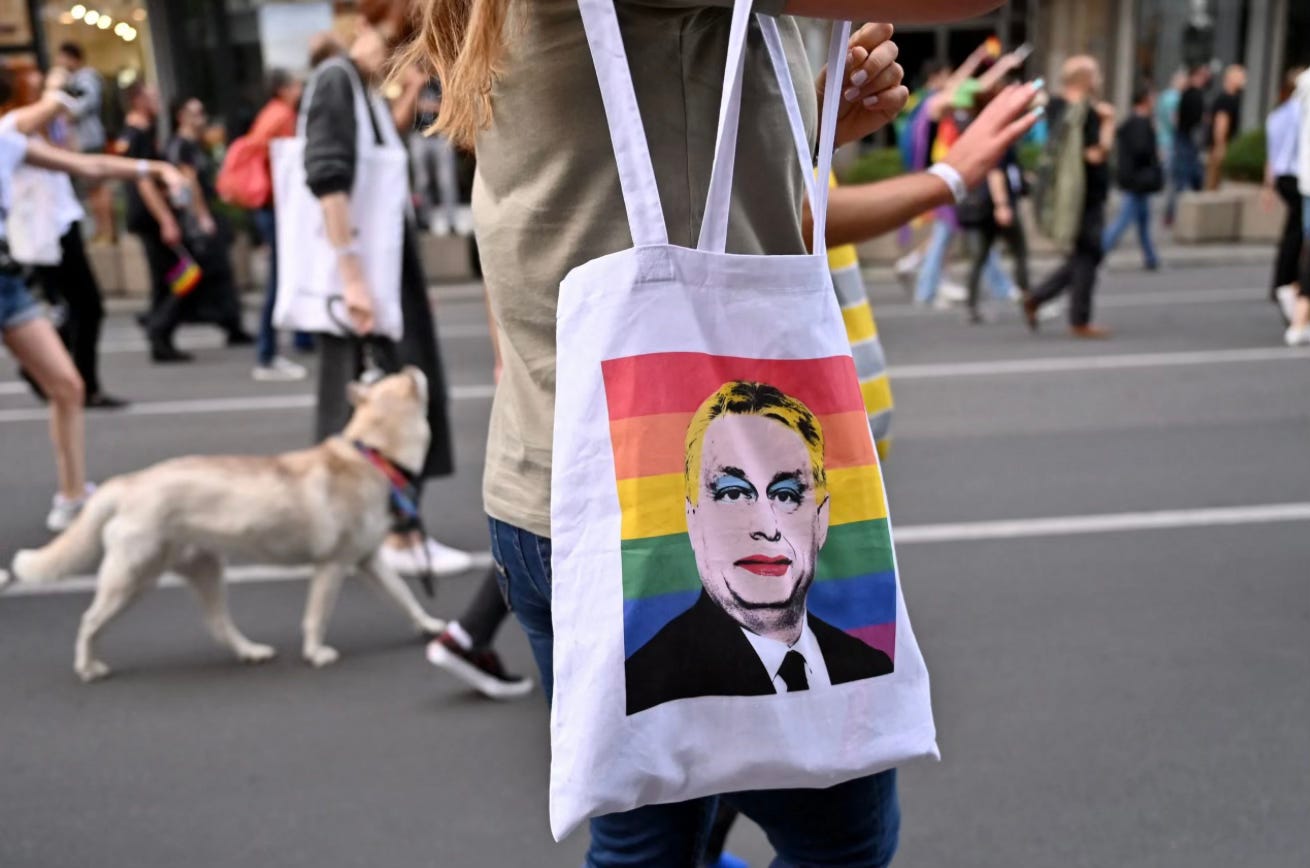
This dynamic is hardly without precedent. In Russia, early crackdowns on LGBTQ+ expression - beginning with regional “propaganda” bans in the late 2000s and culminating in a 2013 federal law - allowed the state to refine legal mechanisms for policing gender expression. Those same legal tools later became the foundation for nationwide speech suppression and expanded surveillance. Hungary followed a similar trajectory, with the government’s restrictions on LGBTQ+ rights - most notably the 2021 “child protection” law - paving the way for broader crackdowns on judges and journalists.
None of this means that every dispute involving trans people amounts to democratic backsliding. A healthy legal system can weigh and resolve disputes involving any group. What matters is whether the government is repeatedly returning to the same population to introduce new restrictions, especially when those restrictions are unrelated in substance. It is that ongoing, cross-agency targeting - not isolated policy disagreements - that indicates a shift in how state power is being exercised.
The passport ruling, taken in context with other executive orders and federal court decisions, makes this dynamic impossible to ignore. It shows a federal government increasingly willing to use the legal system to narrow the rights of one marginalized group, normalizing an approach that can be turned on anyone who dissents whenever it becomes politically expedient. And, absent meaningful constraints on that power, the slow drift into authoritarianism ramps up to a sprint.