
Quick Legal Explainer: The Constitutional Stakes of Don Lemon’s Arrest
At issue is whether documenting a protest can be treated as a federal crime.

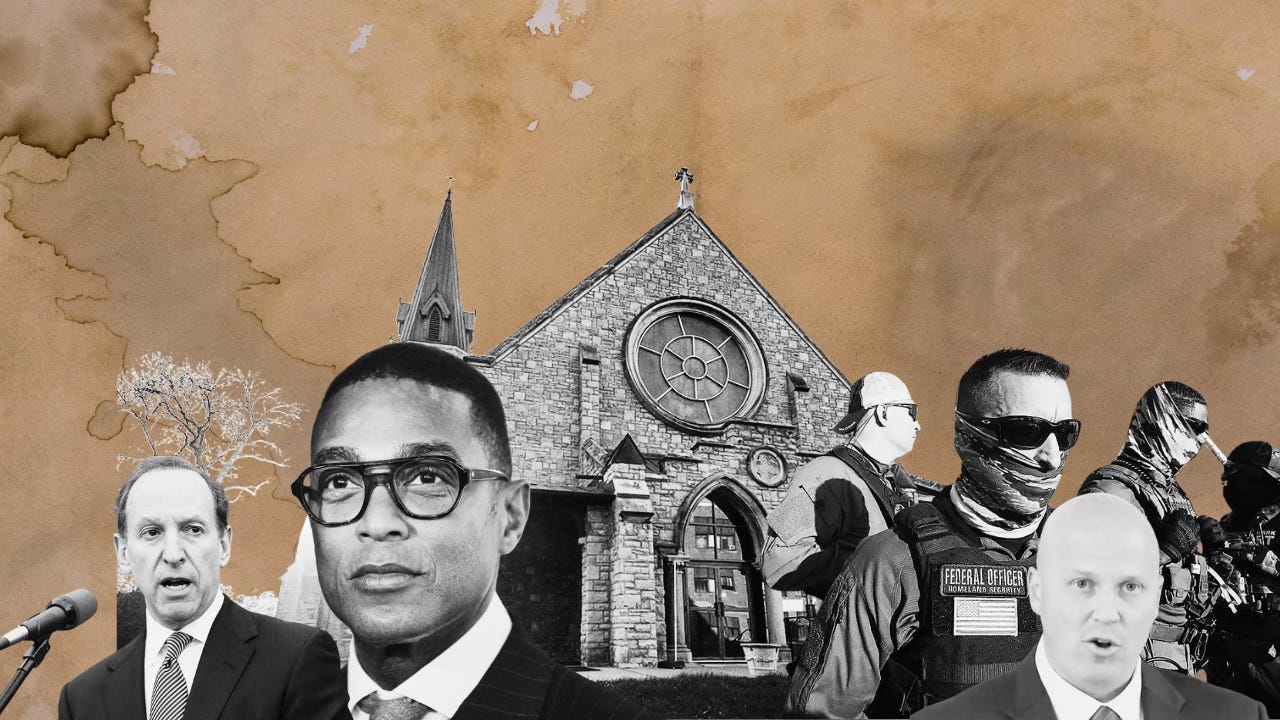
Ryan Powers is a Harvard-trained lawyer and legal analyst featured in The Los Angeles Times, The Guardian, The Hill, and more.
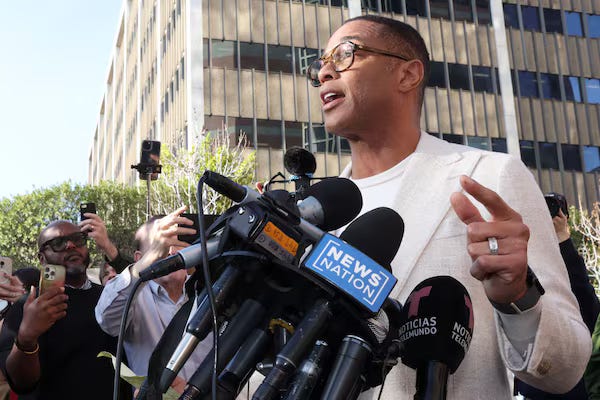
Last week, federal law enforcement arrested journalist Don Lemon following his coverage of an anti-ICE protest inside of a church located in Saint Paul, Minnesota. The protest - part of broader demonstrations against ICE in the Twin Cities area - interrupted church service to criticize the congregation’s pastor, who had also served as a local ICE official. Lemon livestreamed for several hours, interviewing protesters and congregants as the event unfolded.
Lemon was arrested on the theory that his continued presence inside the church and his livestreamed reporting during the protest constituted unlawful interference with the congregation’s right to worship. Lemon denies interference, stating that he was present solely as a journalist, observing and documenting events of public concern rather than participating in or directing the protest. Here’s a fuller explanation.
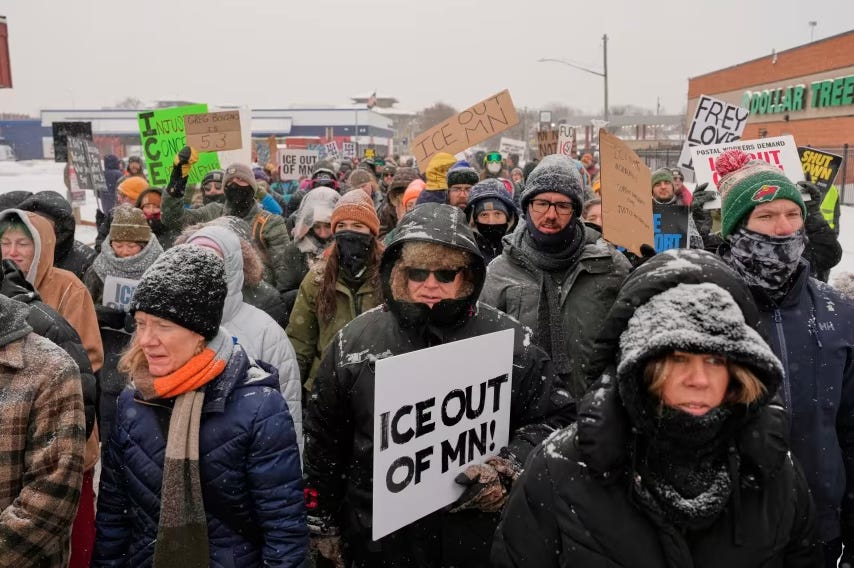
Background: How ICE Ignited Protests in Minnesota
In December, the federal government launched Operation Metro Surge, a large-scale immigration enforcement campaign that deployed thousands of agents from ICE, Customs and Border Protection, and other DHS affiliates to the Minneapolis-Saint Paul area to arrest undocumented immigrants and carry out deportations.
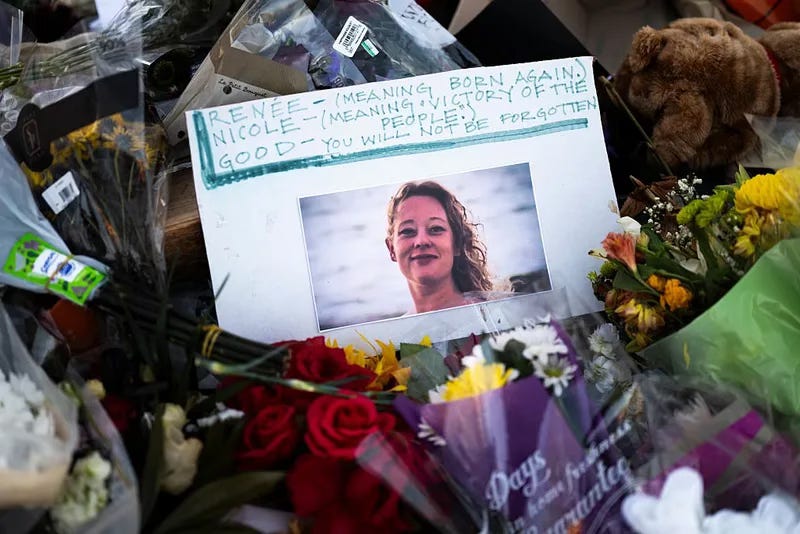
Then, on January 7, 37-year-old Minnesota resident Renée Nicole Good was fatally shot by an ICE agent during an enforcement operation in south Minneapolis, and just a few weeks later 37-year-old ICU nurse Alex Pretti suffered the same fate by U.S. Border Patrol agents while observing and attempting to assist fellow demonstrators. Both Good and Pretti were U.S. citizens, and their deaths undercut federal claims that the operations were routine enforcement, sharply intensifying public outrage and thrusting Minnesota into the center of national ICE controversy.
The Demonstration That Triggered Federal Charges, Explained
In the midst of these demonstrations, anti-ICE demonstrators interrupted a January 18 service at Cities Church to protest Pastor David Easterwood. Easterwood, who is listed as one of the pastors of the Southern Baptist congregation in Saint Paul, has also worked as the acting field director for the local ICE office in Minnesota. Easterwood’s connection with ICE - especially in light of the past month’s unrest - led demonstrators to rally for his resignation from the church.
Many journalists were in attendance, including Don Lemon, formerly of CNN and now hosting and producing content through his independent media platform The Don Lemon Show. Over the course of several hours, Lemon documented himself walking with demonstrators, interviewing both activists and congregants inside and outside the church, and narrating the unfolding events while identifying himself as a journalist.
Following the protest, Justice Department officials sought charges against Lemon for allegedly conspiring to interfere with religious worship, which can constitute a federal crime. A federal magistrate judge initially declined to approve a criminal complaint. Prosecutors then presented the matter to a grand jury in Minnesota, which returned a two-count indictment charging Lemon with civil rights violations.
Then, on January 29 - more than a week after the initial protest - Lemon was taken into federal custody by government agents. He was released without bond the following day, represented by veteran First Amendment attorney Abbe David Lowell, who has famously defended high-profile political figures like Hunter Biden and Jared Kushner.
Still, the fight is far from over. Although Lemon was released from custody, federal charges remain pending, and the case is now moving toward pretrial litigation. In a statement immediately after Lemon’s release, Lowell said, “Don has been a journalist for 30 years, and his constitutionally protected work in Minneapolis was no different than what he has always done.” Lowell added that the pursuit of charges is “an unprecedented attack on the First Amendment” and that Lemon will “fight these charges vigorously and thoroughly in court.”
The Federal Laws at the Center of the Case
The legal significance of the case is in how the government chose to prosecute it.
First, prosecutors considered charges under the Freedom of Access to Clinic Entrances Act (FACE Act), 18 U.S.C. § 248. Although the law is best known for protecting access to abortion clinics, it also makes it a federal crime to use force, threats, or physical obstruction to interfere with religious worship.
In this case, the government argued that the protest itself disrupted the congregation’s ability to worship, and that Lemon’s decision to remain inside the church and continue livestreaming as the service was interrupted amounted to unlawful “interference” under the statute. In other words, prosecutors treated his presence and real-time documentation of the disruption as conduct that allegedly facilitated obstruction, even though he did not physically block entrances or engage in violence.
Second, prosecutors relied on 18 U.S.C. § 241, a Reconstruction-era civil rights conspiracy law originally passed to stop organized efforts - such as those carried out by the Ku Klux Klan - to intimidate people out of exercising their constitutional rights. The statute makes it a federal crime for two or more people to agree to interfere with someone’s protected rights, including the right to worship.
In this case, the government argued that the coordinated actions of protesters inside the church formed such a conspiracy, and that Lemon’s continued presence and documentation of the protest placed him within that alleged agreement, even though he was acting as a journalist rather than organizing or directing the protest.
The Constitutional Line the Government Is Testing
The case turns on a narrow but highly consequential legal question: when does reporting become participation? That distinction - usually clear in theory - becomes murky in fast-moving environments, where journalists must make snap judgments in real time, such as how close to stand to demonstrators, what is appropriate to document, and how long to remain on scene.
Journalists do not enjoy blanket immunity from generally applicable laws. But the First Amendment sharply limits the government’s ability to criminalize journalism itself. Courts have long recognized that interviewing participants and remaining present during unfolding demonstrations are core functions of the press, even when the events themselves are unlawful or disruptive. The Constitution does not require reporters to retreat the moment a scene becomes controversial.
To secure a conviction here, prosecutors would need to prove more than mere presence. They would have to show that Lemon knowingly joined a conspiracy to deprive congregants of their constitutional rights, or that his own actions independently amounted to obstruction or intimidation under federal law. That is a demanding standard, particularly where the alleged conduct consists of filming, interviewing, and broadcasting rather than voicing personal opinions, organizing, directing protestors, or physically interfering.
The magistrate judge’s initial refusal to approve charges underscores this difficulty. Probable cause cannot rest on proximity alone. If physical presence combined with documentation is enough to establish criminal liability, then the constitutional boundary protecting the press collapses. Any journalist covering a volatile protest - from a church disruption to an immigration raid - would face potential felony exposure simply for doing the job the First Amendment exists to protect.
A Narrowing Safe Zone for Journalists
None of this exists in a vacuum. Just days before the Cities Church protest, the FBI searched the home of Hannah Natanson, a reporter for The Washington Post, and seized her electronic devices as part of a classified documents investigation. Press freedom organizations described the move as highly unusual, warning that seizing a journalist’s devices risks exposing confidential sources and undermining the basic mechanics of investigative reporting.
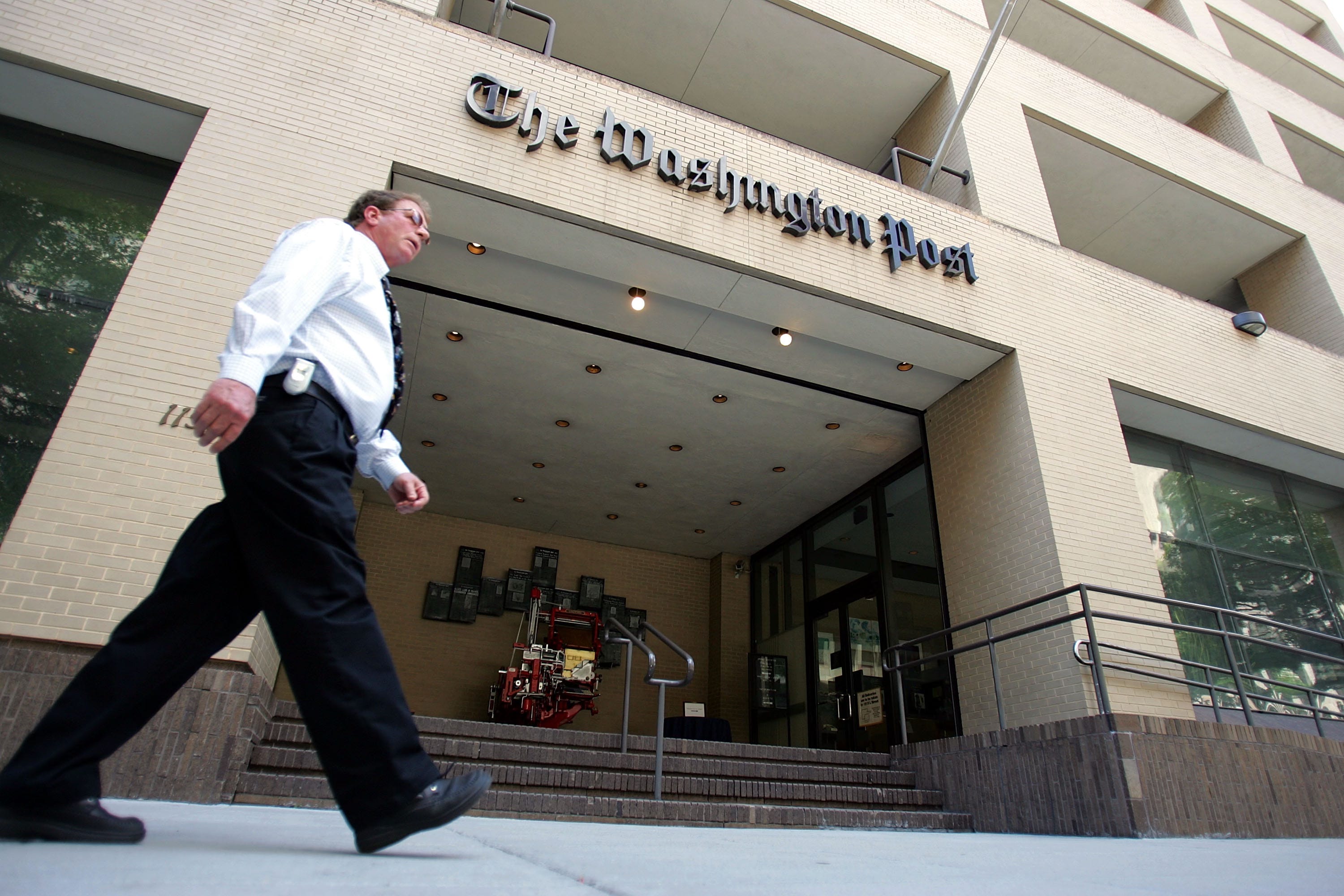
Taken together, these actions reflect a growing federal willingness - particularly obvious in the past month - to use compulsory legal process in ways that directly undermine journalists. While such tools are lawful in narrow circumstances, their use against working reporters has historically been constrained by policy and practice, precisely because of the predictable chilling effect. The concern raised by press advocates is about the cumulative signal sent to reporters and sources alike: that routine journalism now carries some degree of personal legal risk.
The Future of Press Freedom
Lemon is expected to plead not guilty, after which the case will move into pretrial litigation, where his attorneys will likely seek dismissal on First Amendment grounds and challenge whether federal civil rights statutes can lawfully be applied to journalistic activity.
Lemon’s case will likely hinge on whether courts are willing to draw a firm constitutional line between documentation and participation. If they do not, the chilling effect will be immediate and predictable: fewer journalists willing to cover protests in real time and less transparency around government enforcement actions. It would dramatically expand the government’s power to criminalize journalism at moments of political conflict. Federal prosecutors could recast coverage as “interference” - and proximity as “conspiracy” - whenever reporting on controversial events occurs.
That prospect should alarm anyone who values press freedom, because when reporting is treated as interference, the First Amendment no longer protects journalism at all. And without a free press, democratic accountability collapses.